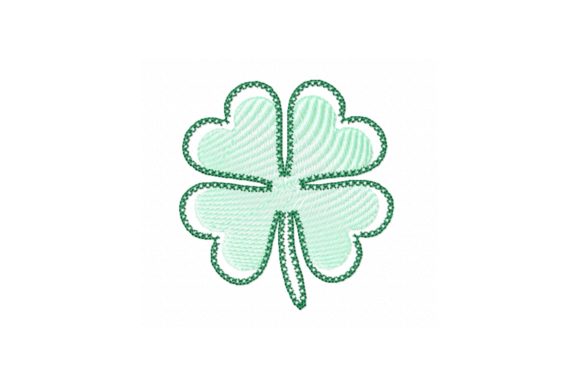
Clover: A Craft Fair-Ready Single Flower Embroidery Design
First Impression: Minimal, Fresh, and Instantly Recognizable
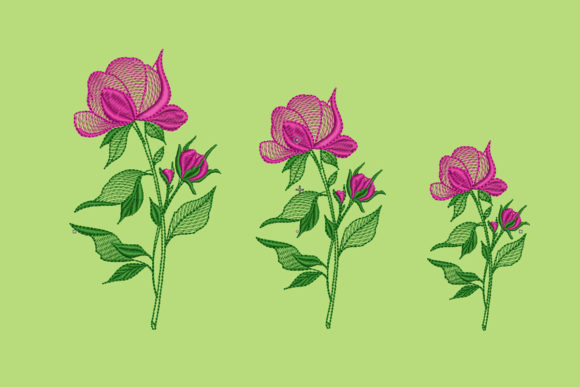
As an embroidery designer who’s prepped over 200 craft fair booths in the past decade, my first thought when I see Clover is: “This will stop people mid-aisle.” It reads as soft-minimal—neither overly rustic nor aggressively modern—but with a quiet confidence that fits seamlessly into farmhouse kitchens, children’s boutiques, and curated handmade markets. The two-color simplicity suggests approachability without sacrificing elegance, and the single-flower motif lands just right for buyers seeking subtle botanical charm—not botanical overload. Clover feels like a signature stitch, not filler.
Where Clover Shines on Craft Fair Products
Clover isn’t a design that shouts—it invites. That makes it ideal for products where tactile detail and refined restraint matter most:
- Tote bag design: Placed just below the handle seam or centered on the front panel, Clover reads cleanly even from three feet away. Its balanced shape holds up beautifully on canvas or linen blends—no distortion, no visual fatigue.
- Apron embroidery: Positioned above the pocket or at the waistband curve, Clover adds personality without competing with function. It’s small enough to avoid bulk but distinct enough to become a talking point (“Is that real clover? Is it lucky?”).
- Tea towel embroidery: This is where Clover truly sings. On cotton or terry-woven towels, its open stitch layout breathes with the fabric texture—no mud-like density, no puckering. Customers love running their fingers over the clean outline and smooth fill.
- Embroidered patch: With only two thread colors and no fine interior lines, Clover converts flawlessly to iron-on or sew-on patches. It scales down to 2” without losing legibility—a rare win for small-shop product lines.
- Pillow cover & pouch accents: As a corner motif or centered on a drawstring pouch, Clover elevates perceived value. Buyers consistently associate this kind of precise, airy botanical with “thoughtful handmade”—not mass-produced digital art.
What Works Online—and What Needs Real-World Testing
Clover photographs exceptionally well for Etsy sellers and digital listings. Its high-contrast two-color structure renders crisply in natural light, and its symmetry ensures consistent mockup results across printable mockup templates. But don’t skip the physical test: run Clover on your actual tea towel fabric *before* listing. Thread contrast shifts dramatically on off-white vs. oatmeal linens—and what looks vibrant on screen can mute fast on textured weaves.
It also performs reliably in batch production. No nested elements, no tiny lettering, no overlapping stitches—just one cohesive shape built for repeatability. That means faster hooping, fewer restarts, and smoother commercial embroidery runs across aprons, market bags, and gift-ready pillow covers.
Careful-Use Notes Every Designer Should Check
Clover’s simplicity is its strength—but not all surfaces are equal. Here’s where attention prevents disappointment:
- Dense stitch areas: Though minimal, Clover’s center cluster has slightly higher stitch density than the outer leaves. Test on thick fabrics (like denim caps or quilted potholders) with medium-weight cutaway stabilizer—lightweight tear-away may shift.
- Curved cap surfaces: Clover works on structured caps *if* you use a cap frame and reduce top tension slightly. Avoid placing it too close to the bill seam, where curvature distorts leaf angles.
- Dark fabric: Two-color designs rely heavily on contrast. If using dark thread on black fabric—or vice versa—confirm visibility in person. A matte navy + ecru combo reads softer than charcoal + bright white; both work, but evoke different moods.
- Small sizes: Below 1.5”, the inner clover knot begins to compress. For embroidered patches under 2”, stick to the full-size version or request a simplified variant from your digitizer.
How Clover Strengthens Your Booth & Brand
In a crowded craft fair, Clover quietly builds cohesion. When repeated across napkins, mug rugs, and children’s clothing samples, it becomes a recognizable motif—your visual shorthand. Buyers remember the feeling of touching a Clover-embroidered tea towel, then seek out the matching pouch or pillow cover. That’s brand consistency built through repetition, not logos.
It also boosts perceived handmade quality. Unlike dense floral fills that look machine-perfect but cold, Clover’s openwork style highlights thread sheen, fabric drape, and stitching rhythm—the very things customers associate with skilled craftsmanship. At booth level, one well-executed Clover sample (say, on a linen apron beside a matching mug rug) draws more engagement than five busy designs competing for attention.
Practical Embroidery Designer Notes Before You Stitch
Before turning Clover into finished product—or uploading it to your Etsy shop—do these six things:
- Test the machine embroidery design on scrap fabric matching your intended product (e.g., terry cloth for tea towels, twill for caps).
- Check thread contrast under both daylight and booth lighting—what pops on your monitor may disappear under warm market tent lights.
- Review spacing between leaf elements: tight gaps can fuse on textured towels. Adjust if needed before cutting production fabric.
- Confirm hoop size compatibility—Clover should fit comfortably in standard 4x4 or 5x7 hoops with room to spare for stabilization.
- Inspect stitch density in the center cluster—ensure it doesn’t overwhelm lightweight fabrics or cause stiffness in children’s clothing.
- Use the right stabilizer: cutaway for stretchy knits, tear-away for stable wovens, and fusible + tear-away for towels with heavy pile.
And always—always—create at least one real mockup. Hang it on your booth display rack. Hold it beside your other bestsellers. See how Clover sits in context. Compare it across three fabric colors. And verify commercial licensing terms before selling any finished product. Clover is a digital embroidery file, not a free-to-use graphic—respect the design assets you’re building your small shop product around.
Final Thought: Clover Isn’t Just a Design—It’s a Sales Catalyst
In the rhythm of craft fair prep—cutting fabric, pressing seams, pricing tags—Clover stands out because it does heavy lifting quietly. It sells on napkins and potholders alike. It translates across age groups and aesthetics. It supports your story as a maker who values clarity, care, and quiet beauty. Whether you’re an Etsy seller launching your first embroidery line or a boutique maker expanding your Single Flowers collection, Clover earns its place in your Embroidery toolkit—not as decoration, but as intention made visible.